
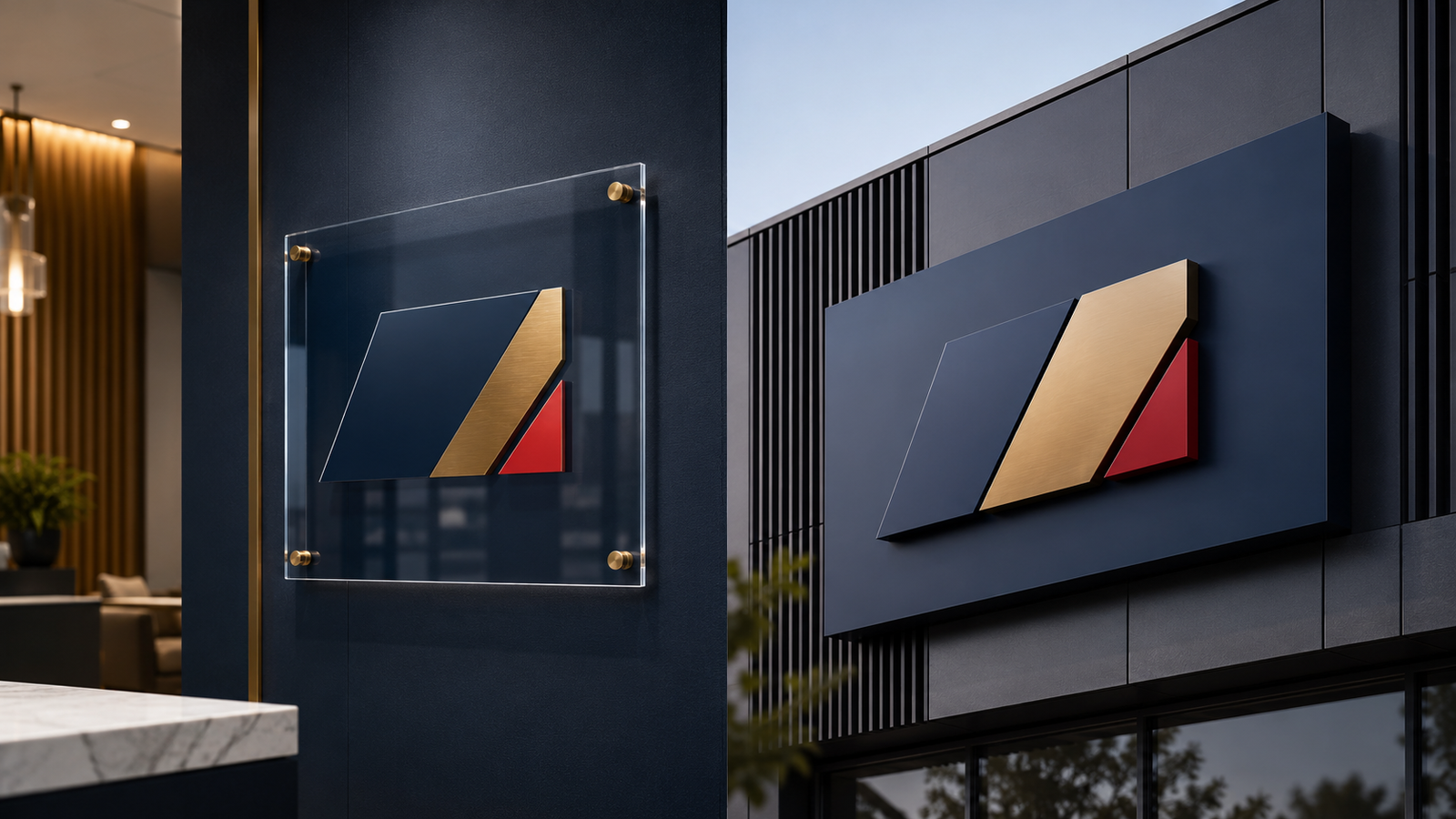
Understanding indoor vs outdoor signage materials is the foundation of any signage project, because a material that looks perfect indoors can fade, warp or fail within weeks under the UAE sun. Signage is a long-term investment in how your brand is seen, and the material decides whether it still looks sharp in two years or two months. This guide compares the main indoor and outdoor signage materials used in the UAE, so you can specify signage that suits its environment, budget and lifespan.
Why indoor vs outdoor signage materials differ
The UAE environment is uniquely demanding on outdoor signage. Intense UV, extreme summer heat, humidity, dust and occasional sandstorms all attack materials and print that would last for years in a milder climate. Outdoor signage must therefore be built and printed to withstand these conditions, using UV-stable inks, weatherproof substrates and durable finishes. Indoor signage faces none of this, so the priority shifts to finish quality, appearance and cost. Using an indoor material outdoors is the most common and costly signage mistake in the region.
Common indoor signage materials
Indoor signage prioritises appearance, finish and cost over weather resistance. The main options each suit different looks and budgets.
| Material | Look | Best for |
|---|---|---|
| Acrylic | Clean, premium, glossy | Reception logos, office signs, wall plaques |
| Foamboard / foam PVC | Flat, matte, economical | Temporary and short-term indoor displays |
| Forex / PVC sheet | Smooth, versatile | Directional and informational signs |
| Vinyl graphics | Applied to walls/glass | Window graphics, wall lettering, branding |
| Fabric / textile | Soft, premium backlit | Backlit displays, exhibition walls |
Acrylic is the premium indoor default for reception and office branding, especially with a laser-cut or raised-letter finish. Foamboard and Forex suit budget or short-term signage. Vinyl graphics are ideal for glass and wall branding. See our signage guide for how these are produced.
Common outdoor signage materials
Outdoor signage must survive UAE weather, so materials and print are chosen for durability and UV stability first.
| Material | Durability | Best for |
|---|---|---|
| Aluminium composite (ACP) | Excellent | Building signs, facades, shopfronts |
| Powder-coated metal | Excellent | Freestanding and structural signage |
| Weatherproof acrylic | Very good | Illuminated and premium outdoor signs |
| Flex banner / mesh | Good (temporary) | Hoardings, event banners, promotions |
| Corianders / 3D letters | Excellent | Illuminated building letters, logos |
Aluminium composite panel (ACP) is the workhorse of UAE outdoor signage — rigid, weatherproof and clean-looking on facades and shopfronts. For anything printed outdoors, UV-stable inks are essential; our UV printing guide explains why. For a signage project, our team can advise on the right material for your setting — request a free consultation.
Illuminated and 3D signage options
Beyond flat printed signs, illuminated and three-dimensional signage adds presence and premium appeal, and it is widely used across the UAE for building and shopfront branding. Channel letters — individual 3D letters, often illuminated with LEDs — give a high-end, architectural look and keep a brand visible after dark. Light boxes house a printed or opaque face lit from behind for even, glowing visibility, ideal for shopfronts and mall units. Backlit acrylic logos and halo-lit letters (where light glows around the letter edges against the wall) create a sophisticated effect for reception areas and premium facades. These options cost more than flat signage because of the fabrication and electrical work involved, but for customer-facing businesses the day-and-night visibility and elevated perception often justify it. When specifying illuminated signage, factor in power supply, mounting and any building-management or landlord approvals, which are common requirements in UAE malls and towers.
Matching material to budget and lifespan
The right material is ultimately a balance of environment, appearance, budget and how long the sign needs to last. For permanent outdoor branding on a building or shopfront, invest in ACP, metal or weatherproof acrylic with UV-stable print — the higher upfront cost is repaid by years of service without fading or replacement. For temporary or promotional outdoor signage such as event hoardings, flex banners are cost-effective and perfectly adequate for a short life. Indoors, match the material to the setting: premium acrylic for reception and brand-critical areas, economical Forex or foamboard for back-of-house or short-term signage. The costly mistake is mismatching the two — paying for premium permanent materials on a sign you will replace in a month, or using cheap temporary materials for permanent outdoor branding that then fails within weeks. Thinking in terms of intended lifespan and viewing importance, rather than upfront price alone, consistently produces the best value. Our guide to choosing a supplier helps you find a producer who will advise honestly on material for each application rather than over- or under-specifying.
Signage approvals and regulations in the UAE
Signage in the UAE, particularly outdoor and building signage, is subject to approvals that vary by emirate, municipality and premises, and overlooking this is a common and costly oversight. Shopfront and building signage typically requires municipality or authority approval covering size, placement, illumination and sometimes design, and malls and commercial towers usually add their own landlord or building-management sign guidelines that must be met. Illuminated signage may need additional electrical and safety sign-off. The practical implication is to factor approvals into your signage timeline from the start, not discover them after production — a finished sign that breaches guidelines may have to be modified or replaced, wasting time and cost. Confirm current requirements — needs confirmation — with the relevant local authority and, for leased premises, the landlord, before finalising design and production. An experienced signage producer will be familiar with typical requirements and can help ensure your design is compliant, but the responsibility for securing approvals ultimately sits with the business, so build this step into every signage project. Getting it right first time avoids delays and ensures your signage goes up cleanly and stays up. Our quality and production guide covers planning signage projects end to end.
In short, signage material choice in the UAE comes down to one guiding question: indoor or outdoor. Answer that honestly, then choose within the right family for your appearance, budget and lifespan needs. Indoor signage can prioritise finish and cost; outdoor signage must prioritise weather and UV resistance first, or it will fail fast in the Gulf climate. Match the material to the sign’s importance and expected life, secure the necessary approvals, and work with a producer who specifies honestly, and your signage will look sharp and professional for years — quietly and continuously representing your brand to everyone who sees it, day and night, for as long as the sign stands in place. Signage done properly is one of the most enduring and cost-effective brand investments a UAE business can make, working continuously to attract, guide and reassure customers without any ongoing effort once installed correctly on the right material for its environment and purpose, and it continues to earn its place long after the initial outlay is forgotten, quietly compounding brand recognition every single day it is displayed to the many passing customers and prospects who encounter it each and every day.
Frequently asked questions
What is the difference between indoor and outdoor signage materials?
Outdoor signage materials must withstand UV, heat, humidity and dust, using weatherproof substrates and UV-stable inks. Indoor materials prioritise finish, appearance and cost since they face none of these conditions. Using indoor materials outdoors causes fast fading and failure.
What is the best material for outdoor signage in the UAE?
Aluminium composite panel (ACP) is the most common choice for building signs, facades and shopfronts — rigid, weatherproof and clean-looking. Powder-coated metal and weatherproof acrylic also perform well, and all outdoor print needs UV-stable inks.
What material is best for reception or office signage?
Acrylic is the premium indoor default, especially with laser-cut or raised lettering, giving a clean, professional finish. Vinyl graphics work well on glass and walls, and Forex or foamboard suit budget or short-term indoor signs.
Why does outdoor signage fade in the UAE?
Intense UV and heat break down non-UV-stable inks and unsuitable materials quickly. Signage printed with UV-stable inks on weatherproof substrates resists fading, while indoor-grade materials used outdoors fail within weeks or months.
Can acrylic be used outdoors?
Weatherproof grades of acrylic can be used outdoors, particularly for illuminated and premium signs, but standard indoor acrylic is not suitable for prolonged UAE sun exposure. Always confirm the grade suits the environment.
What is ACP signage?
ACP (aluminium composite panel) is a rigid, lightweight, weatherproof material made of aluminium sheets bonded to a core. It is the standard for outdoor building signage, facades and shopfronts in the UAE due to its durability and clean appearance.
How long should outdoor signage last?
With the right weatherproof material and UV-stable print, quality outdoor signage should last several years in UAE conditions. Lifespan depends heavily on material choice and print quality, which is why specification matters.
Talk to our team — free consultation
Call or WhatsApp one of our team members now for a free consultation:
- Ms Bonita — +971 55 432 6712
- Mr Jaleel — +971 55 959 9806
- Mr Shoaib — +971 55 265 8802
- Email — [email protected]