
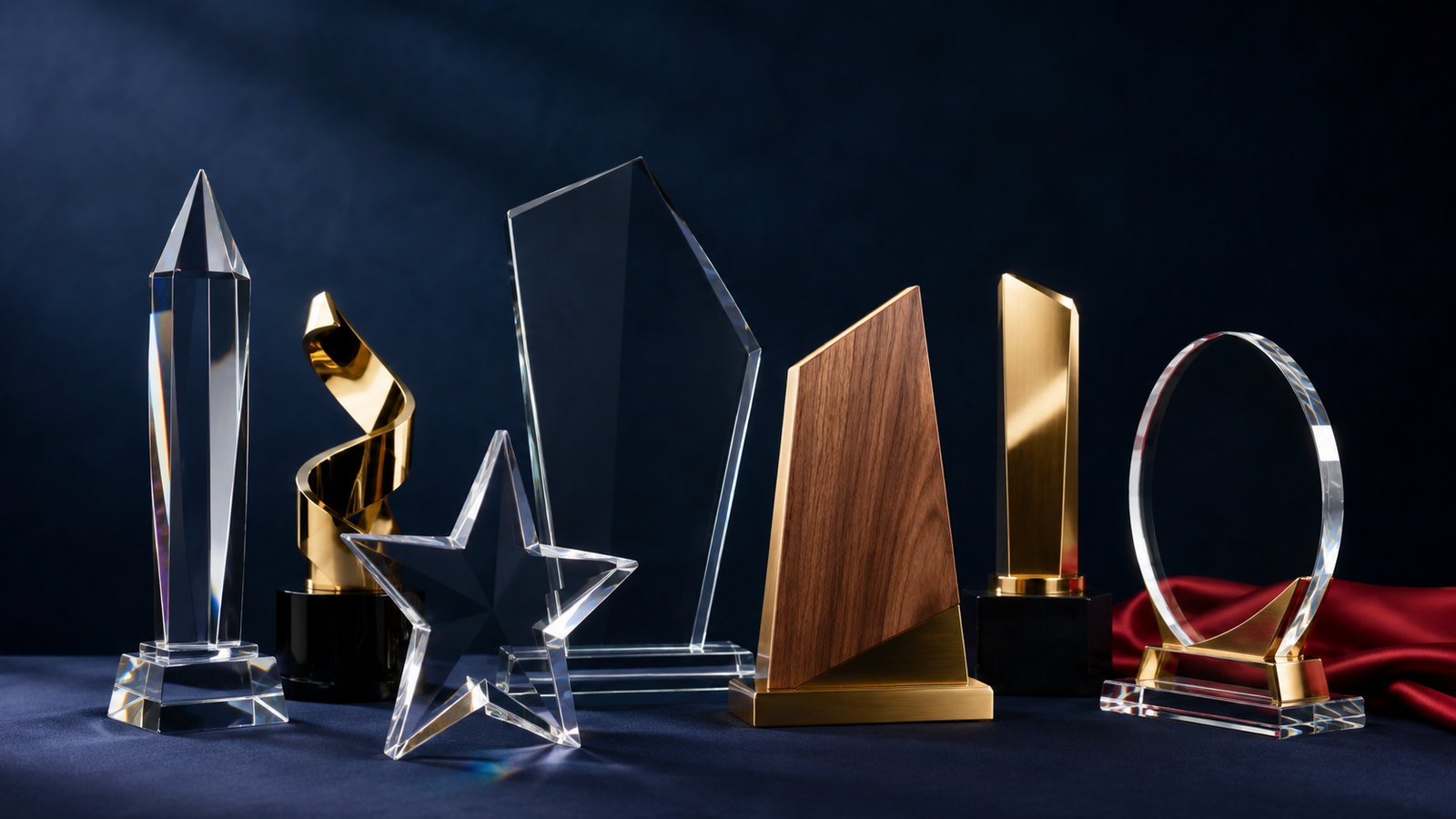
Choosing the right award materials is the first real decision in any recognition project, because the material sets the tone, the cost and the perceived prestige of the award before a single word is engraved. Crystal, metal, acrylic and wood each send a different message and suit a different budget and occasion. This guide compares the main options used across the UAE so you can match material to purpose and brief a supplier with confidence.
The main award materials compared
Each material carries its own associations, price point and decoration options. The right choice depends on the award’s status, the setting and the quantity.
| Material | Feel / prestige | Typical use | Decoration |
|---|---|---|---|
| Crystal / glass | Premium, prestigious | Top awards, VIP recognition, galas | Laser engraving, sub-surface, print |
| Metal | Solid, durable, modern | Trophies, plaques, long-service awards | Laser engraving, etching, print |
| Acrylic | Clean, modern, cost-effective | Team awards, larger quantities | UV print, laser cut, engraving |
| Wood | Warm, natural, sustainable | Heritage, eco-conscious, plaques | Laser engraving, UV print |
Crystal signals the highest prestige and is the classic choice for a company’s top honours. Metal reads as solid and enduring, ideal for long-service and sports-style trophies. Acrylic offers a clean, modern look at a lower cost, making it the practical pick for team awards and larger runs. Wood brings warmth and a sustainable story, suited to heritage or eco-conscious brands.
Matching material to occasion and budget
- Crystal — reserve for flagship, VIP and gala awards where prestige matters most.
- Metal — durable long-service awards, sports trophies and plaques built to last.
- Acrylic — cost-effective for team awards, internal recognition and higher quantities.
- Wood — heritage, sustainability-led brands, and warm executive plaques.
- Mixed materials — combining metal on wood, or acrylic with metal accents, adds perceived value.
Budget usually decides between crystal and acrylic for the headline look, while quantity often tips team awards toward acrylic. For a tiered programme — a premium crystal award for the top honour and acrylic for category winners — mixing materials keeps prestige high where it counts and cost controlled across the rest.
How material affects decoration and cost
The material dictates which decoration methods are possible and how the finished award looks. Crystal and glass suit laser engraving and sub-surface engraving for that frosted, premium effect; see our guide to laser engraving. Acrylic and wood take UV printing well for full-colour logos. Metal is typically laser-engraved or etched. Cost is driven by material, size, complexity and quantity — one-off setup for engraving or print is spread across the run, so larger quantities lower the per-unit cost. Our branding and printing methods guide covers each decoration option in detail.
To see ready options, browse the awards and trophies range, or pair awards with corporate gifts for a full recognition package.
Size, weight and presentation
Beyond the material itself, the size, weight and presentation of an award shape how prestigious it feels in the recipient’s hand. A heavier, substantial crystal or metal award carries an unmistakable sense of value, which is why flagship honours are rarely small or lightweight. For the top awards, weight is part of the message. Presentation matters just as much: a quality gift box, a velvet-lined case, or a printed presentation sleeve transforms an award from an object into an occasion. For a company’s most important recognition moments, budgeting for premium packaging alongside the award is well worth it, because the unboxing is part of the experience the recipient remembers. For team and internal awards where budgets are tighter, a simpler box or sleeve still lifts the perceived value at modest cost.
Base and mounting choices also affect the finished look. Awards mounted on a weighted base, or plaques set on a quality backing, read as more considered and durable. When specifying, think about where the award will be displayed — a desk, a trophy cabinet, a reception wall — and choose a size and format that suits that setting. An award that is too large for a desk or too small for a wall loses impact regardless of the material quality.
Ordering awards — quantity, lead time and reorders
Awards often run to short, bespoke quantities, which affects both cost and lead time. Because engraving and print setup is a one-off charge, very small runs carry a higher per-unit cost, while standardising a design across a recognition programme spreads that cost and lowers the price per award. For annual award ceremonies and event honours, order well ahead: bespoke crystal and custom shapes need lead time for production and decoration, and rushing risks quality on pieces that are meant to signal prestige. Our quality and production guide explains how sampling and proofing protect the finished result, and our guide to choosing a supplier helps you pick a producer who can deliver consistent quality on time.
For recurring programmes, keeping your award design and artwork on file makes reorders fast and consistent — the same award can be produced year after year with only the recipient’s details changing. This consistency is itself valuable: a recognisable, repeated award format builds prestige within a company over time, becoming something staff aspire to earn. Standardising your core awards while reserving bespoke pieces for the very top honours is the practical way to balance impact, consistency and budget across a long-running recognition programme.
Matching award materials to UAE occasions
Different occasions across the UAE calendar call for different award materials, and matching the two well makes each event feel considered. Corporate galas and annual excellence awards favour premium crystal for maximum prestige and photographic impact under event lighting. Long-service and retirement awards suit metal or a metal-on-wood combination that signals durability and heritage — fitting for recognising years of commitment. Sports days, internal team competitions and larger-quantity recognition lean toward acrylic, which delivers a clean modern look at a scalable cost. Sustainability-led organisations and heritage brands increasingly choose wood, which carries a warm, natural story that aligns with responsible values. Government and VIP recognition typically calls for the most premium crystal or metal, presented in quality packaging. Thinking about the occasion first, then selecting the material that matches its significance and setting, ensures the award feels appropriate rather than arbitrary — and it helps you allocate budget where prestige genuinely matters while keeping high-volume awards cost-effective.
Across all these occasions, the guiding principle is proportionality: reserve the premium materials and presentation for the moments and people that warrant them, and use cost-effective materials confidently for higher-volume, everyday recognition. A well-planned awards programme uses the full range of materials deliberately, so every award — from a monthly acrylic piece to an annual crystal flagship — feels right for its purpose. This deliberate, occasion-led approach is what separates a recognition programme that feels premium and considered from one that hands out the same generic trophy regardless of the moment it marks. When the material, size and presentation all match the significance of the occasion, the award does its job — making the recipient feel genuinely and appropriately honoured while reflecting real thought on the part of the company that chose it.
Frequently asked questions
What is the best material for corporate awards?
It depends on purpose and budget. Crystal is best for top, prestigious awards; metal for durable long-service and trophy-style awards; acrylic for cost-effective team awards and larger runs; and wood for heritage or sustainability-led brands.
Is crystal or acrylic better for awards?
Crystal offers the highest prestige and weight for flagship awards but costs more. Acrylic gives a clean, modern look at a lower price and suits team awards and higher quantities. Many programmes use crystal for the top honour and acrylic for the rest.
Which award material is most cost-effective?
Acrylic is generally the most cost-effective, especially at higher quantities, while still looking modern and professional. Wood and metal sit in the mid-range, and crystal is typically the premium option.
Can awards be made from mixed materials?
Yes. Combining materials — such as metal on a wooden base, or acrylic with metal accents — adds perceived value and visual interest, and lets you create a distinctive award that stands out.
What is a sustainable award material?
Wood is the most naturally sustainable option and carries a warm, heritage feel. It suits eco-conscious brands and can be paired with responsible sourcing for a stronger sustainability story.
How does material affect how an award is decorated?
Crystal and glass suit laser and sub-surface engraving; acrylic and wood take UV printing well for full colour; metal is usually laser-engraved or etched. The material determines which methods give the best result.
Does quantity affect award pricing?
Yes. Engraving and print setup is a one-off cost spread across the run, so ordering more units lowers the per-unit price. Small bespoke awards cost more per piece than larger standardised runs.
Talk to our team — free consultation
Call or WhatsApp one of our team members now for a free consultation:
- Ms Bonita — +971 55 432 6712
- Mr Jaleel — +971 55 959 9806
- Mr Shoaib — +971 55 265 8802
- Email — [email protected]