
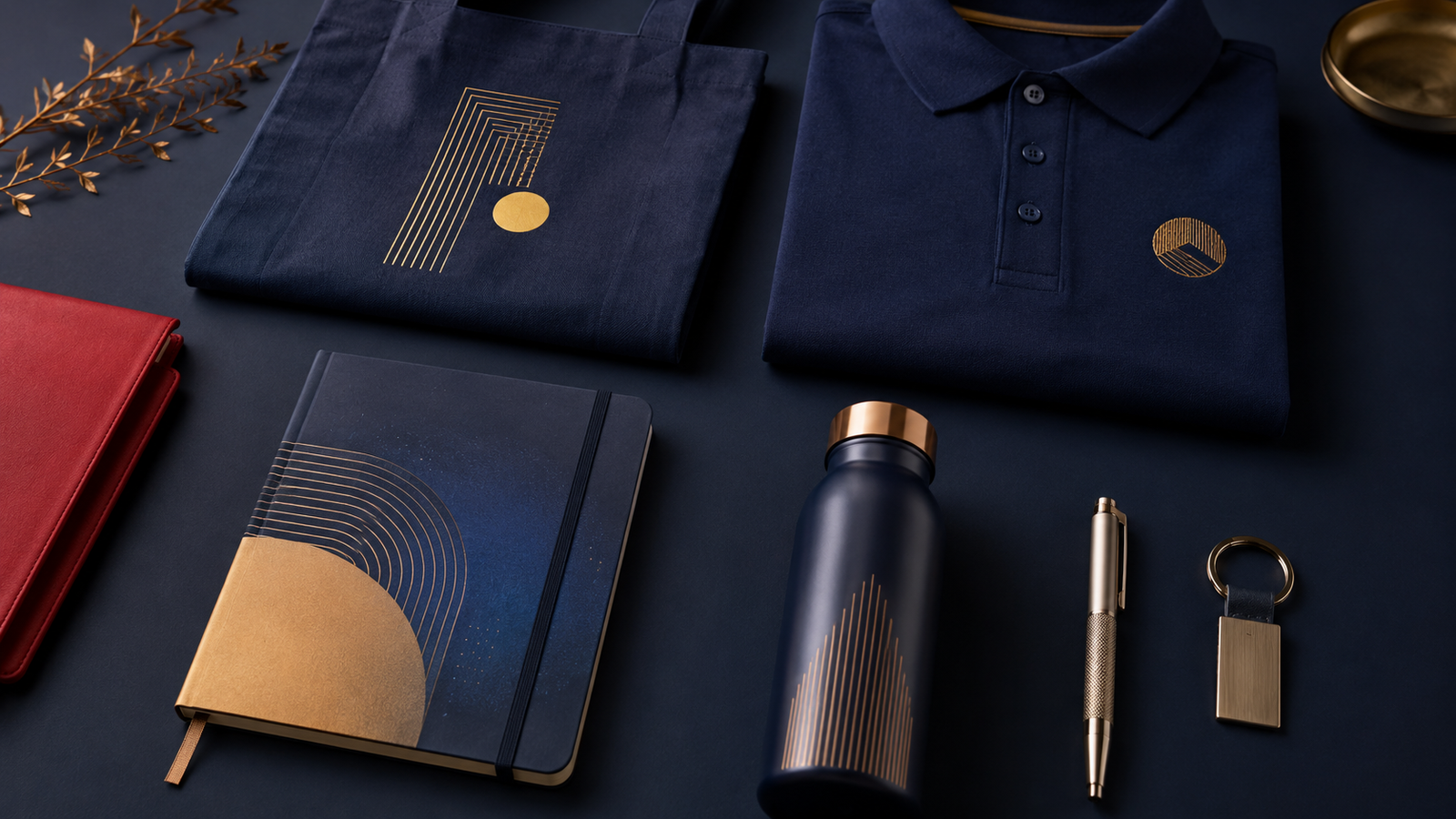
Choosing the wrong decoration method is the single most expensive mistake buyers make on a branded-merchandise order. The logo peels off a powder-coated bottle after two washes, a gradient turns to mud on a screen-printed t-shirt, an engraving disappears into a dark anodised pen — and the whole run is wasted. This guide is written for the person signing off the order: marketing managers, procurement teams and admin buyers in the UAE who need to know which method suits which product, what quality looks like, what drives the price, and how to supply artwork that actually works. It is a knowledge guide, not a sales page.
Why it is worth getting right: research by the Advertising Specialty Institute (ASI) has repeatedly found that around 85% of consumers remember the advertiser on a promotional product, and its 2026 Global Advertising Impressions Study estimates a single branded item generates roughly 3,300 brand impressions over its usable life at an average cost of about US$0.006 per impression. That return only materialises if the branding survives real use and looks the way your brand should look. The decoration method is what decides that.
The three questions that decide the method
Before comparing techniques, answer three questions. They eliminate most options for you and prevent the classic mismatches.
- What is the surface? Fabric, hard plastic, coated metal, glass, ceramic, wood, leather and acrylic each accept ink or marking differently. The substrate rules out methods before budget ever enters the conversation.
- How many colours and how much detail? A one-colour bold logo, a full-colour photographic design and fine gradients are three different jobs. Some methods handle unlimited colour for free; others charge per colour.
- What quantity and what budget per unit? Some methods carry a fixed setup cost that is punishing at low volumes and negligible at high volumes. The right method at 50 units is often the wrong method at 5,000.
Every major branding method, explained
Screen printing
Ink is pushed through a fine mesh stencil, one screen per colour. It gives dense, durable, vivid colour and is the most cost-effective method for medium-to-large runs of one to four spot colours on textiles, tote bags and flat surfaces. The economics are driven by a per-colour screen setup, so it shines on high quantities and struggles on tiny orders or photographic artwork. For a fuller primer see our explainer on what screen printing is and how it works.
Digital printing and direct-to-garment (DTG)
Digital methods jet ink straight onto the product with no per-colour setup, making them ideal for full-colour, photographic or highly detailed artwork and for smaller quantities where screen setup would not be justified. DTG applies this principle directly to garments and is unbeatable for complex multi-colour designs on cotton in low volumes; it is less economical than screen printing at scale and performs best on cotton-rich fabrics. Our guide on what makes direct-to-garment printing effective covers the trade-offs, and the difference between digital and offset printing matters when you are printing packaging, boxes or paper collateral rather than products.
Heat transfer and DTF (direct-to-film)
A design is printed onto a film or transfer and pressed onto the product with heat. Modern DTF produces full-colour, durable transfers that work across cotton, polyester and blends, including performance sportswear that screen printing struggles with. It is excellent for detailed, multi-colour designs on apparel at low-to-medium quantities and for names and numbers on team kit.
Sublimation
Sublimation turns solid dye into gas that bonds into the surface, so the design becomes part of the material rather than sitting on top. The result cannot crack or peel, allows edge-to-edge full-colour photographic printing, and is the standard for polyester apparel, mugs, mouse mats, lanyards and all-over prints. The catch: it only works on polyester or specially coated substrates, and it cannot print white or work on dark fabrics.
UV printing
A flatbed UV printer lays down full-colour ink that is instantly cured by UV light, printing directly onto rigid and irregular items — pens, power banks, bottles, phone cases, wood, acrylic and signage panels — in a single pass, often with a raised, textured finish. It handles photographic detail and multiple colours with no per-colour setup, which makes it versatile for hard-surface promotional items and short-to-medium runs.
Pad printing
A silicone pad picks up ink from an etched plate and stamps it onto curved or uneven surfaces that flat methods cannot reach — the clip of a pen, the side of a golf ball, small electronics. It is precise on tiny areas but is a spot-colour process best suited to one or two colours.
Laser engraving
A laser burns or ablates the surface to leave a permanent mark with no ink at all. On metal it produces a premium, tactile finish that never fades, wears or washes off, which is why it is the method of choice for executive pens, drinkware, awards, plaques and leather goods. Fibre and MOPA lasers can even produce tonal or colour-shift marks on stainless steel and anodised aluminium. The engraved colour is whatever the material reveals underneath, so laser is about permanence and prestige rather than brand-colour matching.
Embroidery
Thread is stitched directly into the fabric, giving a raised, textured, hard-wearing finish that signals quality — the default for polo shirts, caps, jackets, workwear and hospitality uniforms. Cost is driven by stitch count (how large and dense the design is), not by the number of thread colours, and very fine detail or small text does not reproduce well in stitch. See how embroidery and screen printing each reinforce brand identity on apparel.
Emboss, deboss and foil
These pressure-and-heat finishes create a raised (emboss), recessed (deboss) or metallic (foil) mark, most often on leather notebooks, diaries, folders and premium packaging. They are subtle, tactile and premium, carrying no colour of their own — chosen for feel and perceived value rather than vividness.
Method comparison at a glance
Use this table as a shortlist tool. “Min-quantity economics” describes where each method becomes cost-effective, not a hard minimum — confirm exact MOQs and setup charges with your supplier.
| Method | Best for | Colour handling | Durability | Min-quantity economics |
|---|---|---|---|---|
| Screen printing | Textiles, tote bags, flat surfaces | 1–4 spot colours | High | Better at higher volumes (per-colour setup) |
| DTG / digital | Cotton apparel, detailed art | Full colour / photographic | Medium–High | Great at low volumes; costlier at scale |
| DTF / heat transfer | Apparel, sportswear, names & numbers | Full colour | Medium–High | Low–medium runs |
| Sublimation | Polyester apparel, mugs, lanyards | Full colour, edge-to-edge | Permanent (in-material) | Any volume (polyester/coated only) |
| UV printing | Pens, bottles, hard items, signage | Full colour | High | Short–medium runs, no per-colour setup |
| Pad printing | Curved/small surfaces | 1–2 colours | Medium | Medium runs |
| Laser engraving | Metal pens, drinkware, awards, leather | Material tone only | Permanent | Any volume; premium finish |
| Embroidery | Polos, caps, jackets, uniforms | Thread colours (cost by stitch count) | Very high | Low–high; setup = digitising |
| Emboss/deboss/foil | Leather, notebooks, packaging | None / metallic foil | High | Medium–high runs |
How to prepare artwork for each method
Most reprints are caused by artwork problems, not machine problems. A few rules prevent almost all of them.
- Supply vector artwork (AI, EPS or PDF) wherever possible. Logos scale to any size without blur and separate cleanly into colours. Screen, pad, laser, embroidery and cutting all prefer vector.
- For photographic or full-colour designs, supply high-resolution raster (300 dpi at final print size) — relevant to DTG, DTF, sublimation and UV.
- Specify brand colours as Pantone (spot) references so ink can be mixed to match; do not rely on an on-screen RGB value, which will not reproduce accurately in print.
- Confirm the branding area and orientation — the print area on a mug, a pen barrel or a cap front is small and fixed; a logo that looks fine on paper may not fit.
- Convert fonts to outlines before sending, so the supplier does not need the exact font installed.
- Always approve a digital proof, and ideally a physical pre-production sample, before a full run — especially for a new colourway or a first order with a supplier.
Common branding mistakes to avoid
- Matching the method to the budget instead of the product. Screen printing a 50-piece full-colour order forces compromises; a digital or transfer method would have been cheaper and better.
- Expecting laser or embroidery to match a brand colour. Laser reveals the material tone; embroidery is limited to thread shades. Plan the effect, not the exact hex code.
- Ignoring the substrate. Sublimation on cotton, or standard vinyl on stretch sportswear, will fail. Confirm the material accepts the method.
- Skipping the sample on a large or first order. A sample costs a little time; a wrong 5,000-unit run costs the whole budget.
- Sending a low-resolution logo pulled from a website. It will print pixelated. Ask your brand or design team for the original vector file.
- Forgetting decoration limits on curved and small items. Fine text under a certain size will fill in or fall off the print area.
What Mustang produces in-house
Mustang Advertising Trading LLC runs a real production facility in Dubai. In-house capabilities include screen printing, UV flatbed printing, laser engraving, embroidery, sublimation and heat-transfer decoration, backed by cutting, heat-press and finishing equipment. Doing the decoration ourselves means we control quality, protect your deadline and keep artwork under one roof — rather than relying on a chain of subcontractors. Where a specialist finish sits outside our floor, we say so and manage it through vetted partners.
How the price of branding is built
The number on a quote is assembled from a handful of components. Once you can see them, you can cut cost without cutting quality — and you can tell whether a cheap quote is genuinely cheaper or simply leaving things out.
- Setup charge (screens, plates, embroidery digitising): a one-time cost per design that is spread across the run. It is punishing on small orders and negligible on large ones — which is why the same design can be cheap per unit at 1,000 pieces and expensive at 50.
- Number of colours or stitch count. Screen and pad printing charge per colour; embroidery is priced by stitch density and size; digital, UV and sublimation are effectively colour-blind on price. Reducing a logo to fewer spot colours can noticeably lower a screen-print bill.
- Branding area and print positions. A front, a back and a sleeve are three separate jobs, not one. Every extra position adds setup and run cost.
- The blank product itself — material, weight and quality of the item being decorated.
- Quantity tiers. Unit price steps down at each MOQ break; nudging an order to the next break is often cheaper per unit overall.
- Sampling and proofing. A pre-production sample carries a small cost that protects the whole run — cheap insurance on a large order.
The practical takeaway: consolidating a design to fewer colours or positions, or moving quantity to the next price break, usually saves more than switching supplier — and keeps quality intact.
Which method for which product — quick reference
A fast shortlist by product type. Confirm the exact recommendation against your artwork, quantity and budget.
- Metal pens and metal items: laser engraving for a permanent, premium mark; UV or pad print where brand colour is essential.
- Drinkware: laser or UV on metal bottles and tumblers; sublimation or screen print on ceramic mugs.
- T-shirts and cotton apparel: screen printing for volume; DTG or DTF for full-colour detail and lower quantities.
- Polos, caps, jackets and uniforms: embroidery for a durable, premium finish.
- Tote and cotton bags: screen printing for bold, cost-effective colour.
- Technology items (power banks, USB, chargers): UV printing or laser engraving.
- Notebooks, diaries and leather goods: emboss, deboss, foil or laser.
- Signage and rigid panels: large-format UV and digital printing — see how signage and digital printing affect brand visibility.
Sustainable branding choices
Buyers increasingly need a credible sustainability story, and the method is part of it. Water-based and eco-solvent inks, recycled or organic substrates, and methods that create little waste — laser (no ink at all) and sublimation (no solvents, nothing to peel) — all reduce impact. A 2026 life-cycle study commissioned by the Advertising Specialty Institute and PPAI found branded merchandise ranks among the lower-carbon advertising channels per remembered impression. Pair the right method with the right material — natural-fibre bags, recycled drinkware — for a sustainability claim that holds up.
How to judge decoration quality on a sample
When a sample or proof arrives, judge the decoration the way a production professional would — not just “does the logo look right”.
- Registration and placement: is the mark straight, centred and correctly positioned?
- Colour accuracy: does it match your Pantone reference under normal light, not just on screen?
- Edge sharpness: crisp edges and legible small text, with no fuzz or filled-in detail.
- Coverage and opacity: solid, even ink with no patchiness — especially light ink on dark items.
- Durability: rub the mark; for apparel and drinkware consider a wash test; for engraving check the depth is even.
- Finish: no scorching around laser marks, no cracking on prints, and even stitching with no loose threads on embroidery.
A supplier confident in their work encourages this inspection and explains any limitation of the method up front — for example that a laser mark reveals the metal tone, or that fine text has a minimum readable size.
Frequently asked questions
Which branding method lasts the longest? Laser engraving and sublimation are effectively permanent because the mark is in the material rather than on it. Embroidery is the most durable option on fabric. Screen printing and UV printing are highly durable when applied to the right substrate.
What is the best method for a full-colour logo with a gradient? A digital method — DTG on cotton apparel, UV on hard items, or sublimation on polyester and mugs. Screen printing and pad printing are spot-colour processes and reproduce gradients poorly.
Why do suppliers charge a setup or screen fee? Screen printing, pad printing and embroidery require a one-time preparation step per design (screens, plates or digitising). That fixed cost is spread across the run, so the per-unit price falls as quantity rises.
Can I put my logo on any product? Almost, but the method changes with the surface. The same logo may be embroidered on a cap, laser-engraved on a metal pen, screen-printed on a tote and UV-printed on a bottle. Confirm the branding area and method per item.
Do I need a Pantone colour? For any brand-critical colour, yes. It lets the supplier mix ink to match consistently across products and reorders. Without it, colour is a best guess.
Get the method right the first time
A one-page Branding Method Selector — product in, recommended method and quality notes out — is coming soon to our downloads library (needs build). In the meantime, if you already know what you want to order, you can browse the catalogue and request a quote on giftsuppliers.ae, or talk to our team for a branding consultation and we will recommend the right method for your product, quantity and deadline.