
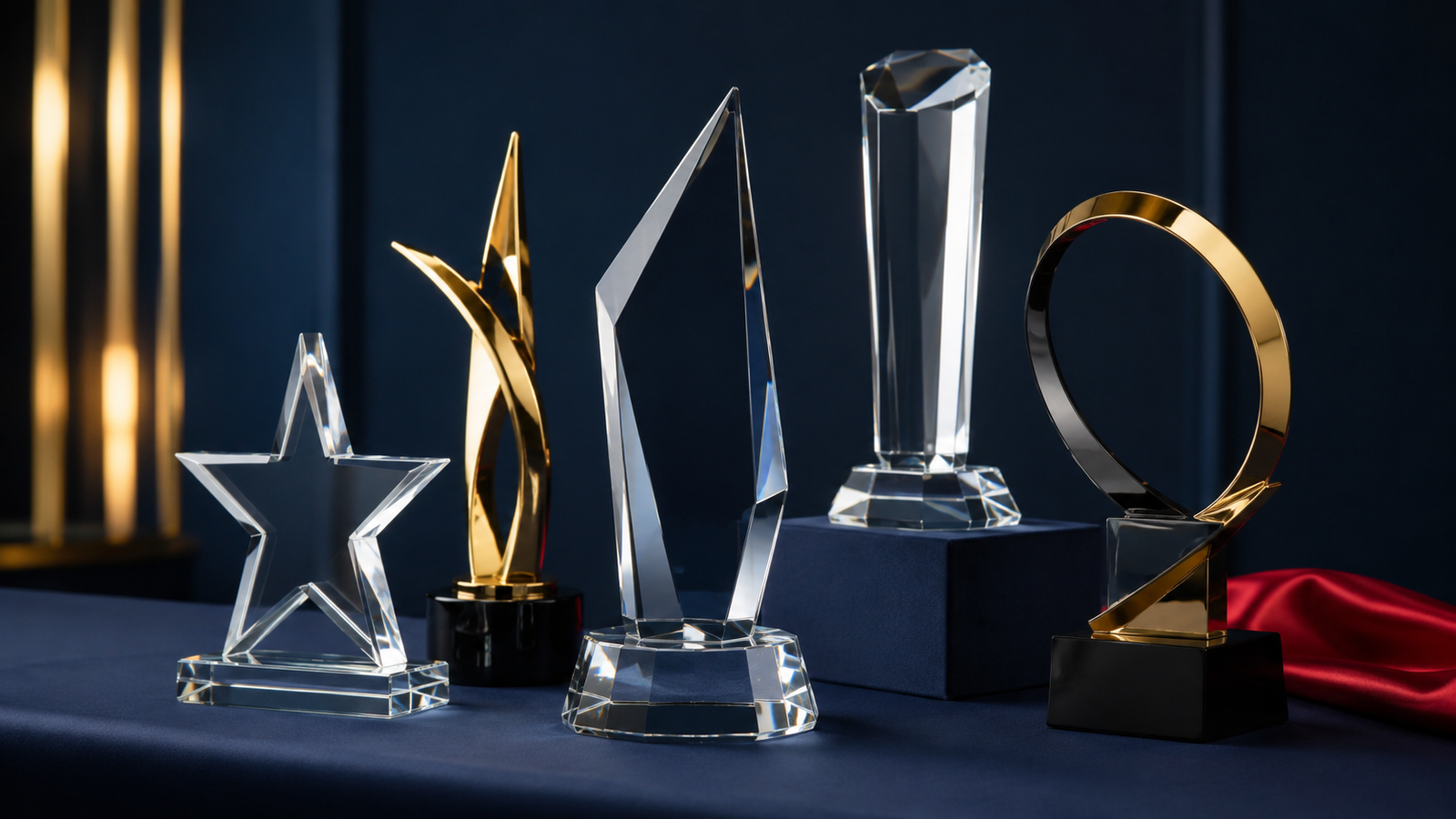
An award is a small object that carries a large message: that someone’s work was seen and valued. Get it right and it sits on a desk for years, quietly reinforcing loyalty and pride; get it wrong — a flimsy trophy, a misspelt name, a finish that scratches on the night — and the gesture backfires. This guide is written for the person organising recognition: HR, marketing and events buyers in the UAE who need to choose the right award, decorate it correctly, and run a recognition programme that actually motivates. It is a knowledge guide, not a sales page.
Recognition is one of the most cost-effective levers a business has for engagement and retention. People who feel genuinely appreciated stay longer, work harder and speak better of their employer — and a well-made award is the physical, lasting proof of that appreciation. The quality of the object is read, fairly or not, as the sincerity of the recognition.
Award materials — what to choose and when
Material sets the tone, the perceived value and the price of an award. Each has a personality; match it to the significance of what is being recognised.
| Material | Feel | Best for |
|---|---|---|
| Crystal / optical glass | Premium, prestigious, weighty | Top honours, executive and long-service awards |
| Metal (steel, aluminium, brass, zinc alloy) | Modern, durable, substantial | Contemporary corporate awards; medals and trophies |
| Acrylic | Clean, versatile, cost-effective | Volume awards, employee-of-the-month, event recognition |
| Wood | Warm, natural, understated | Sustainable-leaning brands; classic plaques |
| Combination (e.g. metal on wood/acrylic) | Layered, distinctive | Custom signature awards that stand out |
Weight and finish do a lot of the talking: a heavier award feels more valuable in the hand, and a clean polished or brushed finish reads as quality. For high honours, spend on the material — it is the part the recipient keeps forever.
Decorating an award: engraving versus printing
How the name, logo and detail are applied changes both the look and the longevity. The core methods, in brief — the full technical picture is in our guide to branding and printing methods.
- Laser engraving — precise, permanent marking on metal, wood and many coatings; the standard for durable, premium personalisation.
- Sand / rotary engraving — traditional engraving into glass, crystal and metal for a classic etched look.
- UV / digital printing — full-colour logos and artwork directly onto acrylic, glass and metal where colour is needed.
- Sub-surface / 3D crystal — an image etched inside optical crystal for a high-end, distinctive effect.
As a rule, engrave anything that must last and read as premium; print where full colour or a logo’s colours are essential. Whatever the method, the text on an award is unforgiving — which is why proofing matters so much (below).
Types of awards
- Trophies — the classic standing award for winners and top performers.
- Plaques & shields — wall or desk recognition for achievements and partnerships.
- Crystal & glass awards — premium desk pieces for significant honours.
- Medals — events, sports, competitions and mass recognition.
- Desk & paperweight awards — understated pieces that live on a desk daily.
- Custom-shape awards — bespoke designs, often reflecting the brand or the achievement itself.
Running a recognition programme that works
An award is most powerful inside a well-run programme, not as a one-off. A few principles separate recognition that motivates from recognition that feels tokenistic.
- Clear, fair criteria — people must understand what is being recognised and believe the process is fair, or the award loses meaning.
- Meaningful categories — recognise the behaviours you actually want to encourage (service, teamwork, innovation, tenure), not just sales numbers.
- Consistent cadence — monthly, quarterly or annual rhythms keep recognition visible rather than sporadic.
- Genuine presentation — how an award is given matters as much as the award; public, sincere recognition multiplies the effect.
- Quality that matches the message — a cheap award undercuts the words; let the object reflect the sentiment.
Planning an awards evening or ceremony
For an annual awards night or ceremony, the awards are one part of a larger production, and they must be perfect on the night. Plan backwards from the event date: finalise categories and winners, lock the engraving text and check every name against a confirmed list, approve a physical sample of each award type, and allow production and a buffer so nothing is rushed. Order a small number of spares for last-minute additions or corrections. On the night, the award should look flawless in the hand and under the lights — which is why the sample-approval step is non-negotiable.
Personalisation, proofing and lead time
The single most common award disaster is a misspelt name or wrong title — and it is entirely avoidable. Treat the engraving text like a legal document: get the exact spelling, title and wording confirmed in writing by someone accountable, and approve a proof before production. Names with unusual spellings, honorifics and Arabic transliterations especially need careful checking. Build in enough lead time that proofing is unhurried; personalised awards cannot be rushed without risking errors, and understanding realistic production timelines — and choosing a partner who proofs carefully — is covered in how to choose a supplier.
Common award mistakes to avoid
- Approving engraving text without a careful, accountable check — the misspelt-name trap.
- Choosing a cheap award whose quality undercuts the recognition it represents.
- Leaving no spares for late additions or corrections.
- Rushing personalisation and skipping the physical sample before an important ceremony.
- Recognising only sales, ignoring the teamwork and service behaviours worth reinforcing.
Size, weight and desk presence
An award’s physical presence shapes how it is perceived. A piece with real weight and a considered size feels valuable the moment it is picked up, while something thin and light can undercut the honour however nice the design. Match scale to significance: a headline annual award can be substantial and sit proudly on a desk or shelf, while a monthly or volume award should be neat and desk-friendly rather than imposing. Consider where the award will live — a desk, a shelf, a wall — and design for that setting, because an award that has nowhere to go often ends up in a drawer, and the recognition with it.
Packaging and presentation of awards
How an award is presented is part of the recognition. A quality presentation box protects the award, elevates the moment it is handed over, and lets the recipient store it safely afterwards. For a ceremony, packaging also matters logistically — awards need to travel to the venue and be handled backstage without scratching or chipping, so protective packaging is practical as well as symbolic. For premium and executive awards, a branded, lined box turns the presentation into an experience worthy of the honour.
Budgeting an awards programme
Award budgets are best set by tier rather than as a single number, so the spend reflects the significance of each recognition.
- Headline / annual awards — the highest tier; premium materials and personalisation justify a higher unit cost for a small number of pieces.
- Category and quarterly awards — a mid tier balancing quality and quantity.
- Volume recognition (monthly, team, participation) — cost-effective materials such as acrylic at higher quantities.
- Spares and reruns — budget a small allowance for late additions and corrections so the ceremony is never held up.
As with any branded order, the cheapest award that looks cheap is a false economy — it undercuts the very message it is meant to carry. Judge value by how the award reflects the recognition, a principle explored further in how to choose a supplier.
Long-service and milestone awards
Long-service and milestone awards — five, ten, twenty years, or a major company achievement — deserve special treatment because they mark loyalty and history. These are the pieces most likely to be kept for life, so invest in materials and personalisation: the recipient’s name, the milestone and a genuine message engraved permanently. A tiered long-service scheme, with the award growing in significance at each milestone, gives staff something to look forward to and signals that the company values tenure — a quiet but powerful retention tool.
Digital recognition alongside physical awards
Physical awards work best inside a culture of recognition, not as the only expression of it. Everyday digital recognition — a shout-out in a team channel, a certificate, a note from leadership — keeps appreciation frequent and visible, while the physical award marks the standout moments. The two reinforce each other: frequent informal recognition builds the culture, and the tangible award gives it a lasting, physical anchor the recipient keeps and displays.
Sustainability in awards
Recognition can be responsible too. Wood, recycled glass and recycled metals offer genuinely premium awards with a lower environmental footprint, and many recipients appreciate the values they signal. Choosing durable, keep-worthy awards is itself the sustainable choice, because a quality piece is kept for years rather than discarded — the same long-life thinking behind why natural, sustainable materials are gaining ground across branded products.
Custom design: creating a signature award
For flagship programmes, a bespoke award designed around your brand or the achievement itself makes the recognition unmistakably yours. A custom shape, a combination of materials, or a form that echoes your logo or industry turns the award into an artefact people photograph and talk about. Custom design carries a higher cost and a longer lead time — concept, prototype, approval and production — so it suits annual headline awards rather than volume recognition. Start early, approve a physical prototype before the full run, and treat the design as a multi-year investment you can reuse each cycle.
Awards beyond employees: partners and community
Recognition is not only internal. Awards for channel partners, distributors, long-standing suppliers and community or CSR initiatives strengthen relationships well outside the payroll. Partner awards reinforce loyalty and can be tied to performance or milestones; community and sponsorship awards build reputation and goodwill. The same principles apply — quality that matches the message, careful personalisation, and thoughtful presentation — but the audience and the story change, so design the award for the relationship it honours.
The ordering process and what to confirm
A smooth awards order comes down to confirming the right things in the right order. Lock the material and award type, then the exact engraving or print content for every piece, approve a physical sample, and only then run production with a buffer before the ceremony. Confirm quantities including spares, the presentation packaging, and the delivery date and location. The single highest-risk item is always the personalisation text, so build in a formal, accountable sign-off step for names and wording. Choosing a supplier who proofs carefully and produces in-house shortens this loop and reduces risk, as covered in how to choose a supplier and the wider branding and printing methods guide.
How recognition drives retention
The business case for awards is retention and engagement. People who feel genuinely and fairly recognised are more likely to stay, to give discretionary effort, and to speak well of their employer — and in a competitive UAE hiring market, retention is money saved on recruitment and lost productivity. A physical award makes that recognition concrete and lasting: unlike a one-off bonus that is quickly spent and forgotten, an award sits in view for years as a daily reminder that the work mattered. That is why award quality is not a cosmetic detail — it is the durability of the message. A well-run programme, with fair criteria and sincere presentation, turns a modest budget into one of the most cost-effective engagement tools a company has.
Plan your recognition programme
Mustang Advertising produces corporate awards, trophies, plaques and medals in-house in Dubai, with laser engraving and printing under one roof, and has supported UAE recognition programmes since 2007. Learn about the group on our companies page or contact the team to plan your awards. To browse options and request a quote, visit our B2B catalogue at giftsuppliers.ae. Lead magnet referenced below is planned and not yet built — needs build. A Recognition Programme Planner is planned to help you design fair categories, cadence and award tiers.
Frequently asked questions
What material is best for a corporate award? Crystal and optical glass read as most premium for top honours; metal suits modern awards and medals; acrylic is cost-effective for volume; wood suits understated, sustainable-leaning brands. Match the material to the significance.
Engraving or printing on awards — which is better? Laser or traditional engraving is permanent and reads as premium; UV/digital printing is best where full colour or a logo’s colours are essential. Many awards combine both.
How do I avoid misspelt names on awards? Confirm the exact spelling, title and wording in writing with an accountable person, approve a proof before production, and take extra care with unusual spellings and Arabic transliterations.
How long do custom awards take to produce? Personalised awards need enough lead time for proofing and production plus a buffer before the ceremony. Plan backwards from the event date and never rush personalisation.
What makes a recognition programme effective? Clear fair criteria, meaningful categories tied to the behaviours you value, a consistent cadence, sincere public presentation, and award quality that matches the message.
Should I order spare awards? Yes — a small number of spares covers late additions, corrections and damage, so a last-minute issue does not disrupt the ceremony.
How far ahead should I order awards for a ceremony? Plan backwards from the event date to allow for proofing, a physical sample, production and a buffer. Personalised awards cannot be rushed without risking errors, so start early.
Can you make a fully custom award design? Yes — bespoke shapes and material combinations suit flagship annual awards. They carry a higher cost and longer lead time, so approve a physical prototype before the full run and reuse the design each cycle.
Are awards only for employees? No — awards for channel partners, distributors, suppliers and community initiatives strengthen relationships beyond the payroll, using the same principles of quality, personalisation and thoughtful presentation.
How does recognition help retention? People who feel fairly recognised tend to stay longer and give more effort, and in a competitive UAE market that saves recruitment cost. A physical award makes the recognition lasting and visible in a way a one-off bonus is not.
What is a long-service award? An award marking tenure milestones such as five, ten or twenty years. Because these are kept for life, invest in quality materials and permanent personalisation with the name, milestone and a genuine message.
Should awards come in presentation packaging? Yes — a quality box protects the award, elevates the handover, lets the recipient store it safely, and helps it travel to the venue without damage.
What size should a corporate award be? Match scale to significance: a headline annual award can be substantial for desk or shelf presence, while monthly or volume awards should be neat and desk-friendly so they are displayed rather than stored away.
What are the most popular corporate award types? Trophies, crystal and glass awards, metal awards and medals, plaques and shields, and desk pieces — chosen to match the significance of the recognition and where the award will be displayed.
