
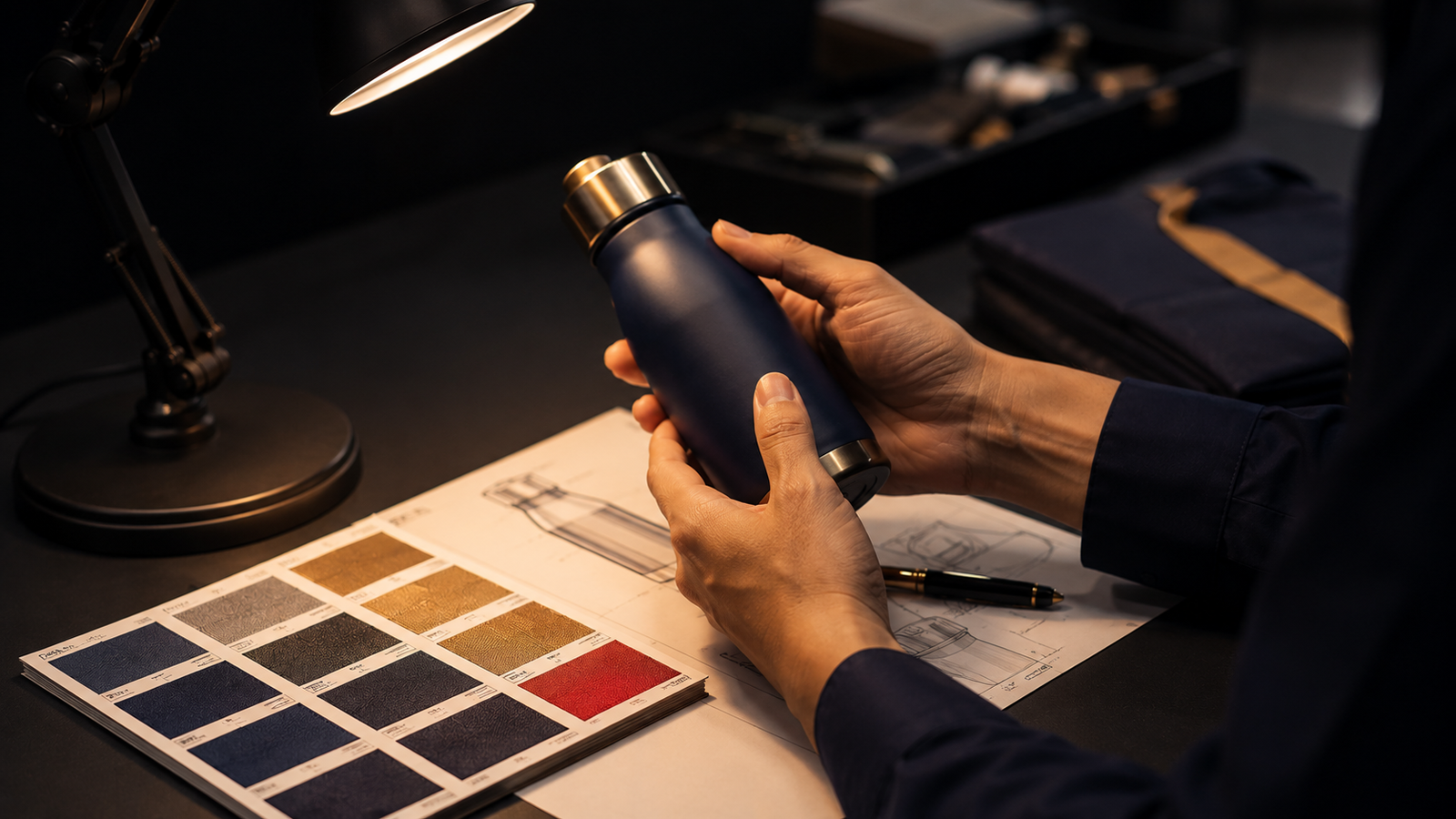
Approving pre-production samples before a full run is the single most effective way to avoid an expensive branded-merchandise mistake. A sample lets you see, hold and check the actual product and branding before hundreds or thousands are produced — catching problems while they cost nothing to fix. This guide explains the types of samples, what to check, and how sampling fits into a smooth production process in the UAE.
Why pre-production samples matter
A quote and a mock-up show intent; a sample shows reality. Colours shift between screen and print, materials feel different in the hand, logo placement can surprise, and sizing varies between suppliers. Approving a physical sample before production means what you sign off is what you receive at volume. Skipping this step to save a few days is the most common cause of a whole order being wrong — and reprinting a bulk run is far more costly than the short delay a sample adds.
Types of pre-production samples
Different sample types suit different stages and budgets. Understanding them helps you request the right one.
| Sample type | What it shows | When to use |
|---|---|---|
| Blank / plain sample | The product itself, unbranded | Confirm material, quality, size, colour |
| Digital proof / mock-up | Artwork placement on-screen | Quick check before physical sample |
| Pre-production sample | Actual product with your branding | Final sign-off before the full run |
| Photo / video sample | Sample documented remotely | Fast approval when time is tight |
For a critical or large order, always request a full pre-production sample — the real product with your actual branding applied. For faster or lower-risk jobs, a digital proof plus a blank sample may suffice. See our print-ready artwork guide for preparing files that proof accurately.
What to check on a sample
- Colour — brand colours match your reference (ideally Pantone), not just ‘close enough’.
- Logo placement & size — position, scale and orientation are correct.
- Print / branding quality — crisp, durable, no smudging or misregistration.
- Material & build — the product feels the quality you expect.
- Size & dimensions — matches specification, especially for apparel.
- Spelling & detail — every word, name and figure is correct.
Check the sample against a written specification, not memory, and have a second person verify spelling and detail. Our quality and production guide covers how sampling fits the wider QC process, and working with an in-house producer makes sampling faster and cheaper. To start a sampled order, request a consultation.
How sampling fits the ordering process
Sampling works best when it is planned into the order from the start, not bolted on at the end. The natural sequence is: confirm the product and specification, prepare and approve artwork, produce and approve the pre-production sample, then release the full run. Each approval is a checkpoint, and signing off in writing at each stage protects both you and the producer — everyone knows exactly what was agreed. For repeat orders of the same item, the approved sample and artwork stay on file, so reorders skip most of the sampling stage and move straight to production, which is one of the reasons repeat orders are faster and cheaper than first orders. Building sampling into your timeline, rather than treating it as an optional extra, is the mark of a well-run procurement process and the surest way to guarantee the finished order is right.
When you can skip full sampling
Full pre-production sampling is essential for large, critical or first-time orders, but it is not always necessary. For low-risk situations — a small reorder of a previously approved item, a stocked product with simple, proven branding, or a very tight deadline on a familiar job — a digital proof plus a blank product sample, or photo/video approval, can be enough. The judgment comes down to risk: the higher the quantity, the more visible the recipient, and the more custom the product, the more a full physical sample is worth. For a client-facing VIP gift or a thousand-unit run, always sample fully; for fifty reorder mugs with a logo you have run before, a proof may suffice. An experienced producer will advise on the right level of sampling for each job, balancing speed against risk so you neither waste time nor gamble on an important order. The guiding principle is simple: never skip sampling to save time on an order you cannot afford to get wrong.
Common sampling mistakes to avoid
A few recurring errors undermine the value of sampling, and all are easily avoided. The first is approving a sample casually — glancing at it rather than checking it methodically against a written specification, which lets errors through the very gate designed to catch them. The second is skipping the physical sample on a critical order to save a few days, then discovering at volume that the colour or material is wrong. The third is failing to check spelling and detail on the sample, since a misspelled name or wrong date reproduced across a whole run is both costly and embarrassing. The fourth is not keeping the approved sample for reference, so there is no benchmark to check the production run against later. The fifth is approving verbally rather than in writing, leaving disputes unresolvable if the delivered goods differ. Avoiding these — check methodically against spec, always sample critical orders, verify every word, keep the approved sample, and sign off in writing — turns sampling from a formality into the genuine safeguard it is meant to be. Treated seriously, a sample approval is the cheapest insurance available on any branded order, and it is the single habit that most reliably prevents expensive production mistakes.
Samples and colour accuracy
Colour is the area where samples earn their keep most often, because it is where screen, proof and finished product diverge most. A logo colour that looks perfect on a monitor can print noticeably different on fabric, metal, ceramic or coated surfaces, since each material and print method reproduces colour differently, and screens are backlit while printed products are not. This is why brand-critical orders should specify colour to a physical reference such as a Pantone swatch and confirm it on an actual sample in normal lighting, not just approve an on-screen proof. For companies with strict brand guidelines, this step is essential — an off-brand colour on a large run of client gifts or uniforms is both costly to remedy and damaging to the brand consistency the order was meant to reinforce. A physical sample checked against your colour reference removes this risk entirely. Where exact colour matters most, ask the producer how they match and control colour across the run, and confirm the approved sample becomes the colour benchmark for production. Getting colour right at the sample stage is far cheaper than discovering a mismatch across hundreds of finished units, and it protects the brand consistency that is often the entire point of producing branded merchandise in the first place, and the reason colour approval deserves particular care on every order.
Frequently asked questions
What is a pre-production sample?
A pre-production sample is the actual product with your branding applied, produced before the full run so you can check colour, placement, quality and detail. Approving it ensures the bulk order matches what you signed off.
Why should I approve a sample before a full order?
Colours, materials, sizing and branding can differ from a screen mock-up. A physical sample shows reality, so approving one catches problems while they are free to fix, rather than after hundreds of units are wrong.
What is the difference between a proof and a sample?
A proof (usually digital) shows artwork placement on-screen for a quick check, while a physical sample shows the actual product and branding in your hands. For critical orders, approve a physical pre-production sample, not just a proof.
What should I check on a sample?
Check colour against your brand reference, logo placement and size, print quality, material and build, dimensions and sizing, and spelling and detail. Verify against a written specification and have a second person double-check text.
Do samples cost extra?
Samples may carry a cost, especially custom pre-production samples, but this is minor compared to reprinting a wrong bulk order. Some suppliers credit sample costs against the main order. It is a worthwhile investment for any significant run.
Can I approve a sample remotely?
Yes. When time is tight or you cannot inspect in person, a detailed photo or video sample can support remote approval, though a physical sample remains the most reliable for colour and material-critical orders.
Does sampling delay my order?
Sampling adds a short step, but it is far quicker and cheaper than correcting a wrong bulk run. Building sampling into the timeline from the start prevents it becoming a last-minute bottleneck.
Talk to our team — free consultation
Call or WhatsApp one of our team members now for a free consultation:
- Ms Bonita — +971 55 432 6712
- Mr Jaleel — +971 55 959 9806
- Mr Shoaib — +971 55 265 8802
- Email — info@mustangllc.ae
