
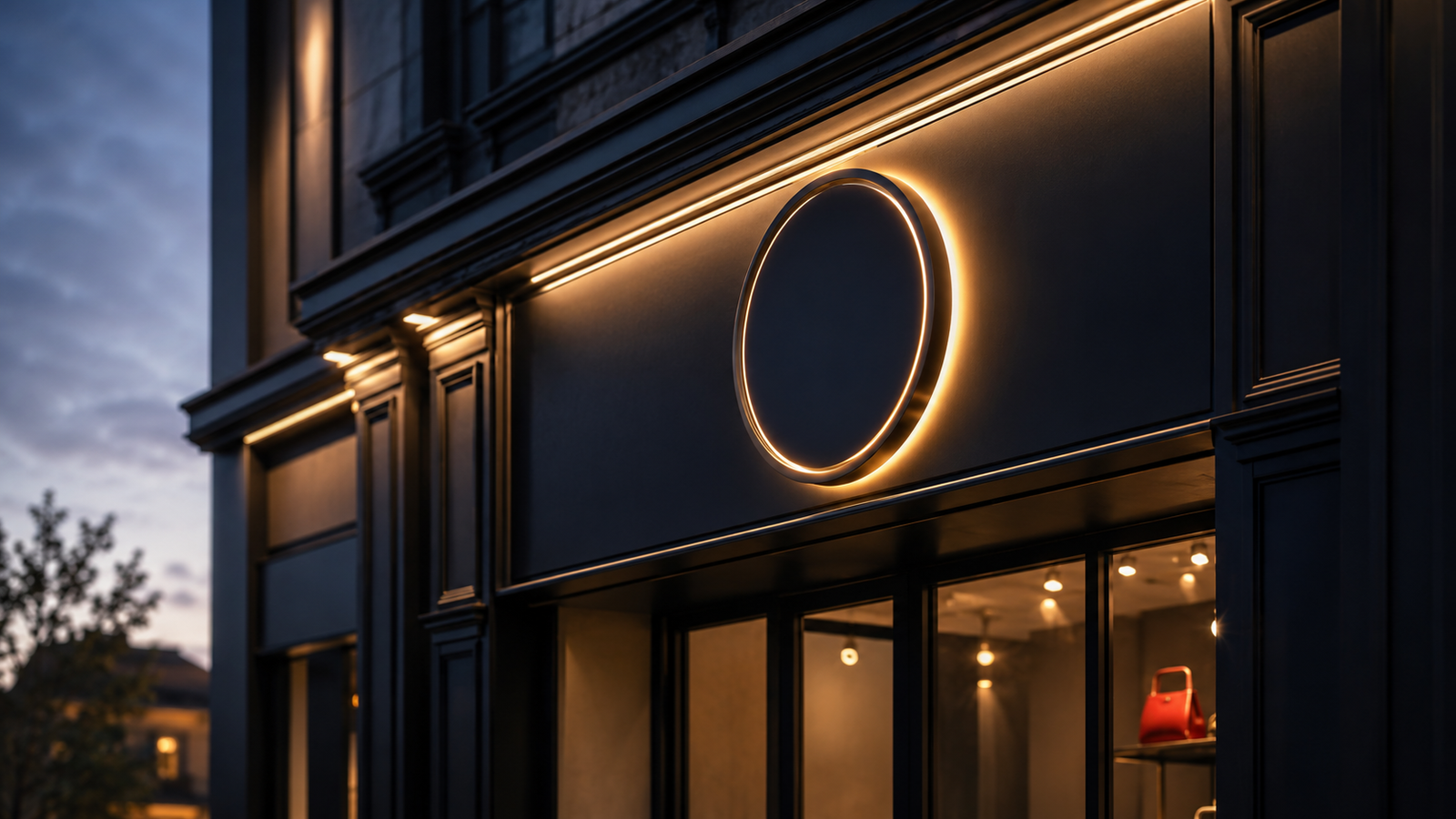
Effective signage for retail and hospitality does more than display a name — it guides customers, reinforces the brand, and shapes the whole experience from the street to the table. In the UAE’s competitive retail and hospitality sectors, signage is a silent salesperson working around the clock. This guide covers the types of signage these sectors need, how to plan a coherent signage scheme, and what to prioritise for impact and compliance.
Why signage for retail and hospitality matters
In retail and hospitality, signage is part of the customer journey. It attracts attention from the street, communicates the brand instantly, directs people to the right place, and reinforces quality at every touchpoint. Poor or inconsistent signage undermines even a great product or venue, while considered signage lifts perceived value and makes a space easier and more pleasant to use. For these customer-facing sectors, signage is a direct contributor to footfall and experience, not a back-office cost.
Key signage types for retail and hospitality
A complete scheme layers several signage types, each doing a specific job across the customer journey.
- Fascia / shopfront signage — the primary brand sign that attracts from the street.
- Illuminated signage — light boxes and channel letters for visibility day and night.
- Directional / wayfinding — guiding customers through malls, venues and floors.
- Menu & display boards — for F&B, retail promotions and pricing.
- Window graphics — promotions, branding and privacy on glass.
- Interior branding — wall graphics, feature walls and decorative signage.
- Safety & regulatory signage — required notices, exits and compliance signs.
Planning a coherent signage scheme
The strongest retail and hospitality signage feels like one coordinated system, not a collection of separate signs. Plan the scheme as a whole: consistent brand colours, fonts and finish across fascia, interior and wayfinding, so the customer experiences a seamless identity from street to seat. Map the customer journey and place signage where decisions are made — at the entrance, at key turning points, at the point of sale or order. Prioritise the fascia and illuminated signage for maximum external impact, then layer interior and wayfinding for experience. Our guide on how signage and printing impact brand visibility explores this further, and consistent production across all pieces is covered in our branding and printing methods guide.
Illuminated signage deserves particular attention in the UAE, where much footfall happens in the evening. Channel letters and light boxes keep a brand visible after dark and signal an established, quality venue. To plan a full retail or hospitality signage scheme, request a free consultation with our team.
Signage and the customer experience
The best retail and hospitality signage is designed around the customer’s journey, not just the building. Think through how a customer arrives, enters, moves through the space and reaches the point of purchase or service, and place signage to support each step. At the street, the fascia and any illuminated signage must attract and identify. At the entrance, clear branding and any welcome or opening-hours information set expectations. Inside, wayfinding guides customers effortlessly to what they want — a frustrating layout with poor signage costs sales, while intuitive signage increases dwell time and spend. At the point of sale or table, menu boards, promotional displays and pricing signage influence the final decision. Designing signage around this journey turns it from decoration into an active tool that improves both experience and revenue, and it is why the strongest retail and hospitality brands treat signage as a core part of store and venue design rather than a finishing touch.
Maintaining and updating signage
Signage is a long-term asset that needs maintenance to keep working, especially in UAE conditions where dust and sun take a toll. Build a simple maintenance habit: clean signage regularly to keep it looking fresh, check illuminated signage for failed LEDs or flickering that make a brand look neglected, and inspect outdoor signage periodically for fading, lifting edges or weather damage. Faulty or tired signage sends a worse message than no signage at all, particularly for premium venues. Plan too for changeable elements — menu boards, promotional windows and seasonal displays should be designed so they can be updated affordably without replacing the whole sign, which keeps ongoing costs down while allowing your messaging to stay current. For multi-site retail and hospitality operators, standardising signage specifications and keeping artwork on file makes rollout to new locations and refreshes across existing ones fast, consistent and cost-effective, protecting a unified brand image across the whole estate. Our quality and production guide covers specifying signage to last.
Working with one signage partner
Retail and hospitality signage spans many types — fascia, illuminated, wayfinding, menu boards, window graphics and interior branding — and the temptation is to source each from whoever is cheapest for that item. In practice, using a single signage partner for the whole scheme produces a better and more cost-effective result. One partner works from one set of brand assets, so colours, fonts and finishes stay consistent across every sign rather than drifting between vendors. Coordination is simpler: one point of contact, one production schedule, one accountable party for the finished result. An in-house producer that handles design, printing, fabrication and installation can also value-engineer the scheme as a whole, suggesting where to invest and where to economise across the full set of signage rather than pricing each item in isolation. For multi-site operators especially, a single partner who holds your specifications and artwork makes every new opening and refresh faster and more consistent. The modest premium of consolidating, if any, is usually outweighed by the consistency, coordination and accountability it brings — and by avoiding the mismatched, assembled-from-parts look that undermines a brand. For a coordinated retail or hospitality signage scheme, our team can manage the whole project end to end.
Ultimately, signage in these sectors is an investment in how customers perceive and experience your brand, working silently around the clock. Planned as a coherent scheme, produced consistently, installed well and maintained properly, it repays that investment many times over in footfall, experience and brand strength.
Prioritising signage on a rollout budget
When opening or refurbishing a venue on a fixed budget, sequence the signage spend rather than trying to do everything at once. Fund the external identity first — fascia and illuminated signage — because this is what attracts customers and carries the most brand weight from the street. Next, invest in the wayfinding and point-of-sale or menu signage that directly shapes the customer journey and influences spending. Interior and decorative branding, while valuable, can follow in a second phase once trading has begun and cash flow allows. This staged approach gets the revenue-driving signage live from day one while spreading the total investment sensibly. Keep the design of later phases planned from the outset so everything remains coherent when added, and keep artwork on file so the second phase and any future refresh drop straight into the established scheme. Prioritising this way ensures a new venue opens looking professional and attracting customers, without the budget strain of completing every last decorative element before the doors open.
Frequently asked questions
What signage do retail and hospitality businesses need?
A layered scheme: fascia or shopfront signage to attract from the street, illuminated signage for day-and-night visibility, directional and wayfinding signs, menu and display boards, window graphics, interior branding, and required safety and regulatory signage.
Why is signage important for retail and hospitality?
Signage attracts customers from the street, communicates the brand instantly, guides people through the space, and reinforces quality at every touchpoint. It directly influences footfall and experience, making it a contributor to revenue rather than just a cost.
What is illuminated signage?
Illuminated signage includes light boxes and channel (3D) letters that are lit internally or externally, keeping a brand visible day and night. It is especially valuable in the UAE where much retail and dining footfall occurs in the evening.
How do I keep signage consistent across a venue?
Plan the scheme as one system with consistent brand colours, fonts and finishes across fascia, interior and wayfinding signage. Producing all signage through one supplier keeps the identity seamless from the street to the point of sale.
What signage should I prioritise on a budget?
Prioritise the fascia and illuminated signage first, as these attract customers and carry the most brand impact externally. Then add wayfinding and interior branding to improve the in-venue experience as budget allows.
Is regulatory signage required in the UAE?
Yes. Retail and hospitality venues must display certain safety and regulatory signage, such as exits and required notices. Requirements vary by emirate and premises — confirm current requirements — needs confirmation — with the relevant local authority.
Can signage be updated for promotions?
Yes. Window graphics, menu boards and display signage are designed to be updated for promotions and seasonal campaigns, while fascia and structural signage remain permanent. Planning for changeable elements keeps ongoing costs manageable.
Talk to our team — free consultation
Call or WhatsApp one of our team members now for a free consultation:
- Ms Bonita — +971 55 432 6712
- Mr Jaleel — +971 55 959 9806
- Mr Shoaib — +971 55 265 8802
- Email — info@mustangllc.ae
