
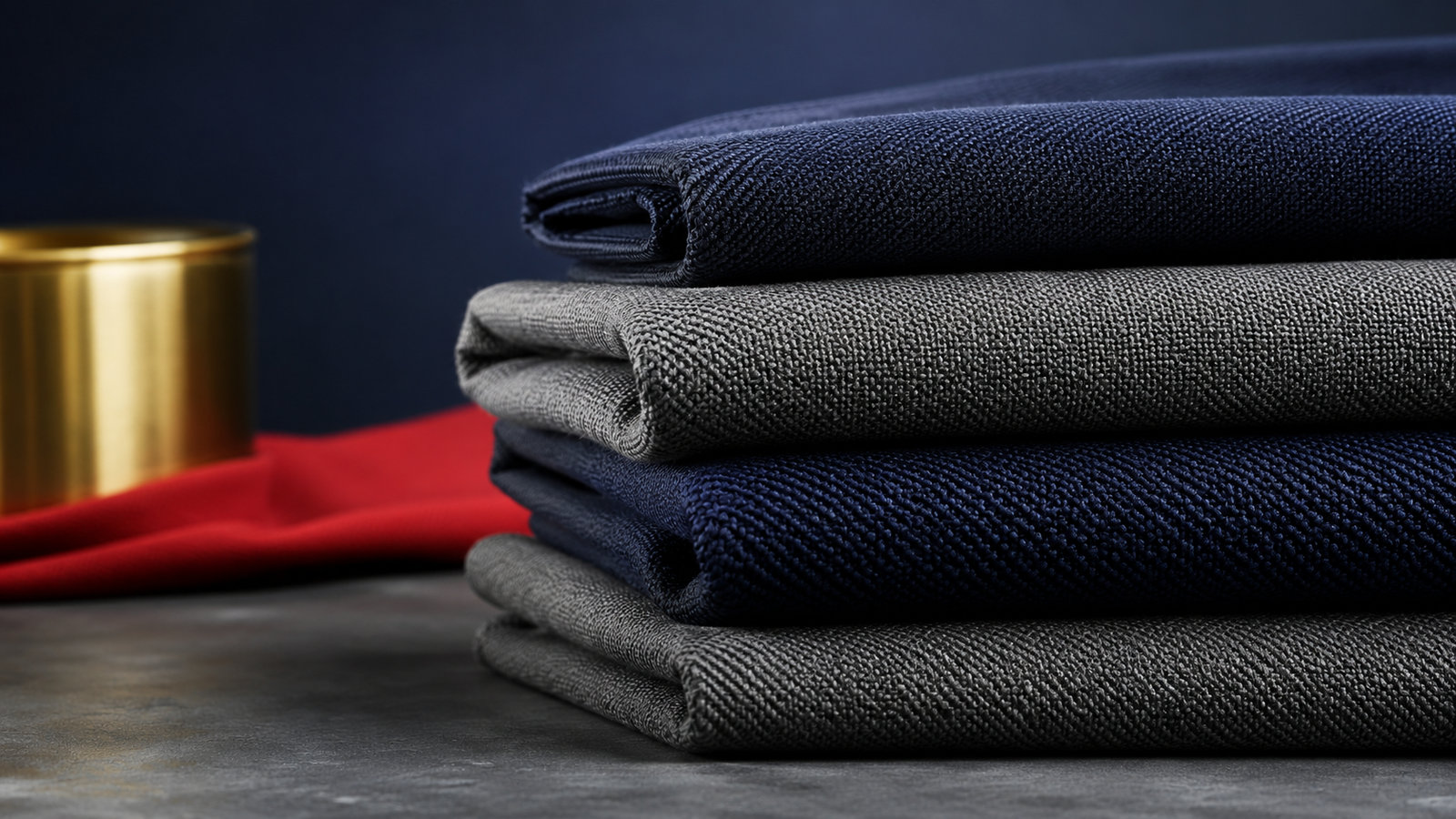
Choosing the right uniform fabric for UAE heat is the difference between a team that looks sharp and works comfortably all day and one that is visibly wilting by mid-morning. In a climate where summer temperatures regularly exceed 45°C and humidity is high, fabric selection is not a cosmetic decision — it directly affects staff comfort, safety, productivity and how long your uniforms last. This guide explains which fabrics perform in Gulf conditions, the trade-offs between them, and how to specify uniforms that hold up to both the heat and daily wear.
Why uniform fabric for UAE heat matters
Heat stress is a genuine operational risk in the UAE, particularly for outdoor, industrial and hospitality roles. The right fabric moves moisture away from the skin, breathes, and dries quickly, keeping staff cooler and reducing fatigue. The wrong fabric traps heat and sweat, leading to discomfort, odour, faster wear and a uniform that looks tired within weeks. UAE labour guidance also restricts outdoor work during peak summer hours; the Ministry of Human Resources and Emiratisation (MOHRE) publishes the annual midday break rules — confirm current dates — needs confirmation — but the principle is clear: heat management, including clothing, is a workplace responsibility.
The main uniform fabrics and how they perform
Most UAE uniforms are built from cotton, polyester, blends, or technical performance fabrics. Each has a role; the right choice depends on the environment and the job.
| Fabric | Breathability | Durability | Best for |
|---|---|---|---|
| 100% Cotton | Excellent | Moderate | Indoor, hospitality, front-of-house comfort |
| Polyester | Low | High | High-wear roles, colour retention, low cost |
| Poly-cotton blend (e.g. 65/35) | Good | High | All-rounder — the UAE workhorse blend |
| Performance / moisture-wicking | Excellent | High | Outdoor, active and industrial roles |
| Linen / linen blend | Excellent | Moderate | Premium hospitality, resort settings |
For most UAE businesses, a poly-cotton blend is the pragmatic default: it balances the breathability of cotton with the durability and colour retention of polyester. For staff working outdoors or physically, a moisture-wicking performance fabric is worth the premium. For premium indoor hospitality, natural cotton or linen elevates the look and feel.
Key properties to specify
- Breathability — the fabric must let heat and moisture escape; this is non-negotiable for UAE conditions.
- Moisture-wicking — pulls sweat to the surface to evaporate, keeping staff dry and cool.
- GSM (weight) — lighter fabrics (lower GSM) generally feel cooler; balance against durability needs.
- Colourfastness — strong sun and frequent washing fade weak dyes fast; specify colourfast fabric.
- Shrink resistance — pre-shrunk or blended fabrics keep sizing consistent across the team over time.
- Ease of care — fabrics that wash and dry easily and resist creasing lower the total cost of ownership.
These properties matter more than headline fabric names. Two ‘cotton’ shirts can perform very differently depending on weave, weight and finishing — which is why sampling before a full run is essential. Our quality and production guide covers how to sample and approve fabric before committing to volume.
Matching fabric to the role
The clearest way to specify uniforms is to start from the job, not the garment. An air-conditioned office role has very different needs from a warehouse or a hotel forecourt. Map your teams to environments first, then choose fabric per group — most companies end up with two or three fabric specifications across their workforce rather than one.
When you are ready to see garment options, browse the apparel and accessories range for shirt, polo and workwear styles, and caps and headwear for sun protection on outdoor roles. Our customised uniform manufacturing guide explains how these are produced and branded in-house.
Fabric care and total cost of ownership
The cheapest fabric per garment is rarely the cheapest over a uniform’s life. A slightly better blend that resists fading, shrinking and pilling can outlast a cheaper option two or three times over, which changes the real cost dramatically. When comparing fabric options, think in cost-per-wear rather than cost-per-unit: a durable, easy-care fabric that stays presentable through hundreds of washes protects both your budget and your brand image. Poor fabric shows its age quickly — faded colour, bobbling and misshapen collars all signal a tired operation to customers, regardless of how smart the design looked on day one.
Wash-care instructions matter as much as the fabric itself. Communicate the correct washing temperature and drying method to staff, because aggressive washing and high-heat tumble drying age fabric prematurely, especially in a climate where uniforms are already stressed by heat and frequent laundering. For industrial or hospitality settings with heavy soiling, specify fabrics rated for hot-wash and commercial laundering from the outset. Building these considerations into the specification stage — rather than discovering them after the first few months — is what separates a uniform programme that stays sharp from one that quietly deteriorates.
Colour choices for the UAE climate
Colour is both a branding and a practical decision. Darker colours absorb more heat, which matters for outdoor roles under direct sun, while very light colours show sweat and soiling more readily. For outdoor and active staff, mid-tones and moisture-managing fabrics in colours that hide perspiration are a sensible compromise. Brand colours will always lead the decision, but where there is flexibility, factoring in how a colour performs under the Gulf sun and through frequent washing pays off. Colourfastness is critical: strong UV fades weak dyes fast, so specifying quality, colourfast fabric keeps your team looking coordinated rather than a patchwork of faded and fresh garments as the uniform ages and pieces are replaced at different times.
Specifying uniforms for different UAE industries
Different sectors place very different demands on uniform fabric, and matching the specification to the industry is what gets the balance of comfort, durability and appearance right. Hospitality front-of-house prioritises a premium look and comfort in air-conditioned but busy environments, favouring cotton-rich blends or linen. Facilities management, construction and outdoor roles need durable, breathable, moisture-wicking fabrics that withstand heat, sun and physical work, often with high-visibility requirements. Healthcare demands easy-care, frequently launderable fabrics that tolerate hot washing. Retail and office roles sit comfortably on a standard poly-cotton blend. Airlines and premium hospitality may invest in tailored fabrics with a specific hand-feel and drape. Mapping each team to its real working environment, and specifying fabric accordingly, avoids the two classic errors: over-specifying expensive fabric for roles that do not need it, and under-specifying cheap fabric for demanding roles where it fails quickly. A good uniform producer will help you match fabric to each role and sample options before you commit to a full run across the workforce. This role-by-role approach typically results in two or three fabric specifications across a business, each chosen for its environment, which delivers better comfort and value than a single compromise fabric stretched across every team regardless of where and how they work. The upfront effort of specifying properly is repaid every day in a team that looks professional and works comfortably through the UAE summer, which supports both staff wellbeing and the professional image customers see whenever your team is in front of them.
Frequently asked questions
What is the best uniform fabric for the UAE heat?
For most roles, a poly-cotton blend (such as 65/35) gives the best balance of breathability, durability and colour retention. For outdoor or active work, a moisture-wicking performance fabric performs best, while premium indoor hospitality suits natural cotton or linen.
Is cotton or polyester better for hot climates?
Cotton breathes better and feels cooler, but wears and fades faster. Polyester is more durable and holds colour but breathes poorly. A poly-cotton blend captures the strengths of both, which is why it is the UAE workhorse fabric.
What does GSM mean for uniforms?
GSM (grams per square metre) is the fabric weight. Lower-GSM fabrics are generally lighter and cooler, higher-GSM fabrics more durable. Choose the weight based on the balance of comfort and wear the role requires.
What is moisture-wicking fabric?
Moisture-wicking fabric pulls sweat away from the skin to the surface where it evaporates, keeping the wearer drier and cooler. It is especially valuable for outdoor and physically active roles in the UAE.
How do I stop uniform colours fading in the sun?
Specify colourfast fabric and quality dyeing, avoid very dark colours for heavy outdoor use where possible, and follow correct wash-care. Sampling before a full run lets you check colour retention.
Should all staff wear the same uniform fabric?
Not necessarily. It is common to specify two or three fabrics across a workforce — for example a breathable blend for front-of-house and a durable performance fabric for outdoor or industrial roles.
Why sample fabric before ordering uniforms?
Two fabrics with the same name can perform very differently. Sampling lets you check breathability, weight, colour and feel before committing to a full production run, avoiding a costly mistake at volume.
Talk to our team — free consultation
Call or WhatsApp one of our team members now for a free consultation:
- Ms Bonita — +971 55 432 6712
- Mr Jaleel — +971 55 959 9806
- Mr Shoaib — +971 55 265 8802
- Email — [email protected]